Ancient khipu string writing discovery upends history of Inka literacy
New research from the University of St Andrews has discovered that khipus, the mysterious string writing of the Inkas, was used by commoners, in findings which turn previous wisdom about their societal structure on its head.
Khipus are knotted-string devices that were used in the Inka Empire for communication and for recording information. Khipus are little understood, in part because most khipus are in museum collections, outside of the context where they were used. Despite recent advances in understanding these Andean khipus, scholars know little about the people who created them.
It was discovered however that makers of the khipus “signed” them with locks of their hair. This recent discovery sheds light not only on how khipus were used, but tantalisingly, who was using them.
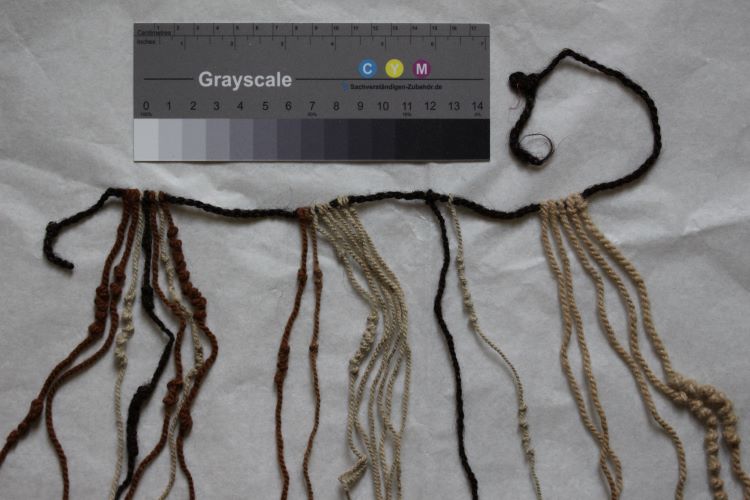
Published today in Science Advances, isotopic sampling of the human hair on an Inka khipu shows that the diet of the person who made it was that of a commoner. The khipu hair tested is from Southern Peru, analysis of hydrogen and oxygen isotopes in the human hair, showed the person who made it lived at an altitude between 2400 and 2800 meters.
These new findings challenge what was previously thought about Inkan culture, literacy and hierarchy. Until now It’s been thought, based on descriptions by Spanish chroniclers, that only a few very high-ranking Inkan bureaucrats supposedly knew how to make these knots.
Lead researcher, Sabine Hyland, Professor of World Religions at the University of St Andrews, who led the research, said: “Diet varied by status in the Inka Empire. Commoners ate a diet of potatoes, legumes, and quinoa grasses. Elites ate meat and drank large quantities of maize beer. Results intimate that who made these Inka khipu had little meat or maize in their diet, the evidence indicate that they were a commoner. This suggests that khipu literacy was more widespread and inclusive in the Inka Empire.”
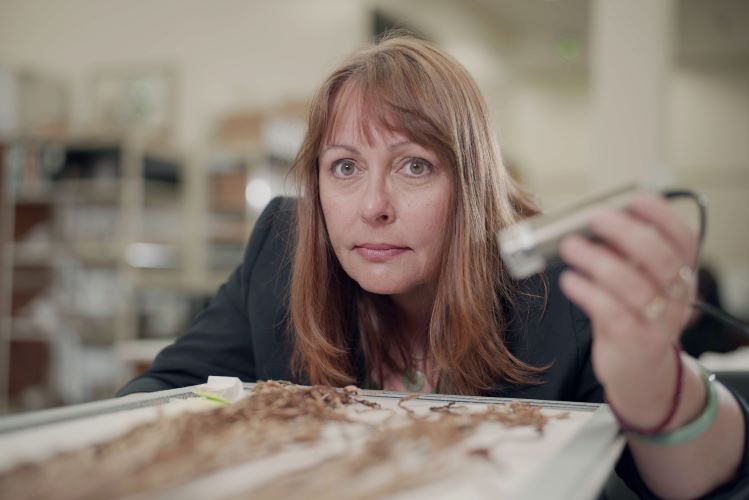
Professor Sabine Hyland
These findings have implications for the nature of khipu literacy during what experts call the Late Horizon period, which coincides with the Inka Empire from c 1400 – 1532 AD.
Whilst colonial records state that only high-ranking males were literate and made khipus, an overlooked indigenous chronicler Guaman Pona de Ayala stated that women also made khipu records, explaining that females over fifty, “Kept track of everything on their quipo.”
Professor Hyland added: “Our new evidence supports the hypothesis that khipu literacy was more widespread than previously thought, and likely included women, who made most of the Inka textiles.”
Category University news