St Andrews Prize for the Environment finalists announced
Three global finalists have been selected for the 27th St Andrews Prize for the Environment – the University of St Andrews sustainability initiative that identifies and champions innovative and inspiring responses to environmental challenges, including the climate crisis.
The St Andrews Prize for the Environment was established by the University to reward and promote projects making significant global contributions to environmental conservation and sustainable development.
The winning project will receive a cash award of US$95,000 to boost their organisation’s efforts at tackling the climate crisis.
The Prize attracts submissions from around the world and has awarded more than US$2.7 million in funding to organisations, innovators and community groups to support their inspirational approaches to addressing environmental and sustainability challenges.
Finalists for the 2026 Prize are:
Sloth Conservation Foundation – Connected gardens
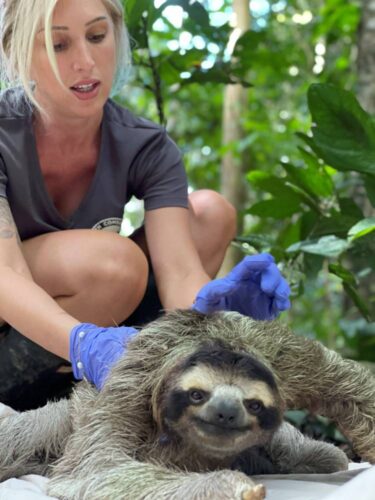
– Founder, Sloth Conservation Foundation
The Sloth Conservation Foundation (SloCo) was founded in Costa Rica in 2017 by Dr Rebecca Cliffe with the mission to protect sloths and the ecosystems they depend on. While sloths are its flagship species, its work benefits entire ecosystems by reducing habitat degradation and restoring connectivity.
Across Costa Rica, the human population has doubled in 40 years and urban development has risen by 250%, and similar trends threaten biodiversity throughout Central and South America. Through its Connected Gardens project, SloCo restores degraded and fragmented forest by creating networks of small biological corridors running through urban areas that link back to protected forests.
Connected Gardens helps arboreal species move safely through human-dominated landscapes by tackling the often overlooked challenge of canopy ‘microfragmentation’, caused by buildings and linear infrastructure.
South Rupununi Conservation Society – Transforming environmental education in Guyana
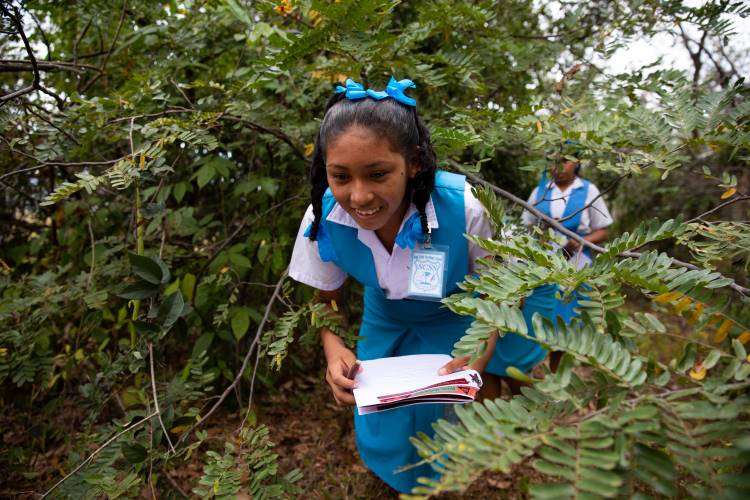
The South Rupununi Conservation Society (SRCS) is one of the leading grassroots, Indigenous-led conservation NGOs in Guyana. It aims to preserve the wildlife, environment, and culture of the Rupununi through community-based conservation, environmental education, and research.
To address the global biodiversity and climate crisis, the world needs to produce populations who are nature positive, environmentally literate, and who are equipped with the relevant skills to address the environmental challenges facing their communities and our world. This is particularly true for Indigenous people, who are responsible for safeguarding over 25% of the world’s land mass and more than 80% of its biodiversity.
Working with local communities, the SRCS created an environmental education curriculum which teaches Indigenous youth about their local wildlife, environment, and culture through a combination of scientific and Traditional knowledge and a mix of practical and theoretical activities. Students later learn about citizen science and implement a project of their own, in their own community, which creates positive environmental change.
IRIBA Water Group – IRIBA tap and drink climate smart water ATMs
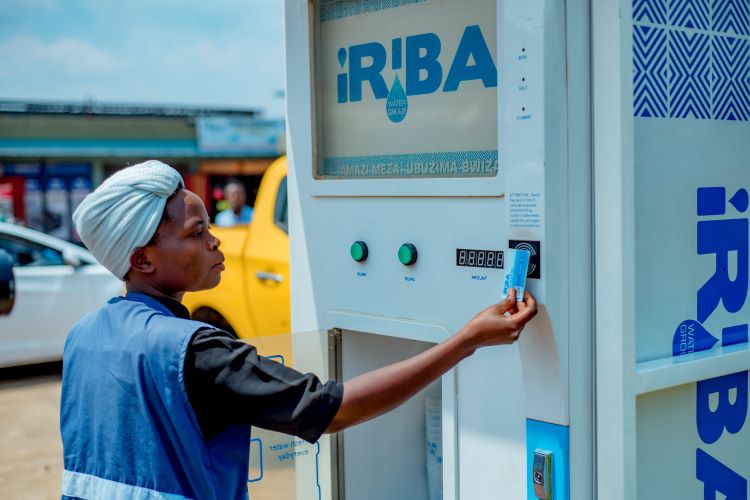
Founded in 2017 by Yvette Ishimwe, IRIBA Water Group is a Rwandan social enterprise delivering climate-smart safe drinking water solutions while creating green jobs for youth and women. Its flagship innovation,IRIBA Tap&Drink, is a smart water ATM system that reduces carbon emissions, eliminates single-use plastics, and makes safe water affordable for schools and communities.
To have safe water, millions of families across Africa are required to boil water using firewood or charcoal. At the same time, single-use plastic bottles and sachets dominate the water market, creating waste that will clog rivers and landfill for generations. IRIBA Tap&Drink was created to break this cycle.
In schools and communities, climate-smart water ATMs are installed, which purify available water sources using energy-efficient reverse osmosis, UV, and ultrafiltration technologies. ATMs are provided free of charge in schools, ensuring every child has safe drinking water, while households pay an affordable subscription for unlimited safe water, creating a model that is inclusive and sustainable. To sustain these operations, IRIBA Water Group leverages climate finance, with each machine generating verified carbon credits, sold as high-integrity credits with strong co-benefits.
You can read more about the three finalists on the St Andrews Prize for the Environment website.
The finalists will present their projects to a panel of judges and students at the University of St Andrews on Tuesday 17 March 2026. The winner of the US$95,000 Prize will be announced that evening.
Previous Prize winner Kham River Restoration Mission will be coming back to St Andrews for the final in March to deliver a presentation on how their work to restore a seasonal river flowing through the historic city of Aurangabad, India. has progressed since winning the Prize in 2024.
The St Andrews Prize presentations and award ceremony takes place during the University’s Sustainability Week, to be held in and around St Andrews during the week commencing Monday 16 March. Members of the St Andrews wider community are especially welcome to attend the broad variety of events taking place throughout the week, including in-person presentations by this year’s finalists.
The University’s Week of Sustainability (16–22 March) will open with a keynote lecture from Professor Sir Jim Skea, Chair of the Intergovernmental Panel on Climate Change (IPCC), one of the world’s leading voices on climate action.
In his talk, Climate Change: Down to Earth Solutions, Professor Skea will explore practical, evidence-based responses to the climate challenge and the role universities and communities can play in driving change.
Tickets will be available to book shortly via the Events page.
Category University news