Funding for innovative technology protecting endangered salmon from seals
The University of St Andrews is working with the Dee District Salmon Fishery Board (DDSFB) in its ongoing effort to protect the critically endangered Atlantic salmon on the River Dee by developing measures to reduce predation.
Funding of £160,000 has been secured by the Sea Mammal Research Unit (SMRU), based at the University of St Andrews, from the Scottish Government’s Marine Fund Scotland. This will enable further development of a new ‘detect and deter’ system on the lower part of the River Dee, aimed at detecting and then deterring seals from the river and preventing predation on salmon.
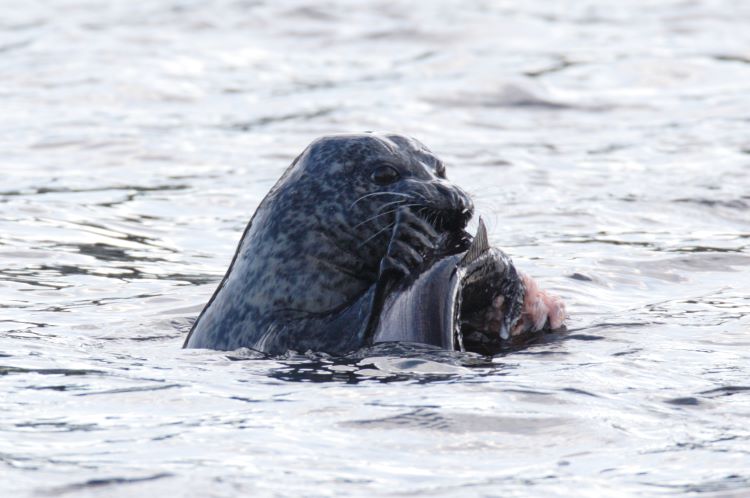
The width of the River Dee presents challenges for detecting seals with the sonar capabilities of the current system and therefore this project will focus on developing a sonar system that can span wider rivers, such as the Dee.
Dr Carol Sparling, Director of the SMRU at the University of St Andrews, said: “Researchers at SMRU are looking forward to working in partnership with the DDSFB team to further develop the detect and deter system. The prototype system has been used in the River North Esk and results so far have been promising. We are hopeful we can now adapt the prototype system to protect salmon from seal predation within larger rivers.”
Lawrence Ross, Chair of the Dee DSFB, added: “We are in a race against time to save our threatened Atlantic salmon as both grey and harbour seals are now coming into the river on a regular basis and eating these fish in significant numbers, therefore they cannot make it back to their up-river spawning grounds and struggle for survival in any meaningful numbers. We are pleased to have the expertise of researchers at the SMRU to help us find a solution to seal predation on Dee salmon and the funding from the Marine Scotland Fund to enable them to do this game-changing work”.
This adaptation and trial of the new detect and deter system is the latest in a protracted line of ideas used to try and tackle seal predation in the Dee, with previous disturbance technology and jet ski operations to move seals back down the river proving ineffective.
The conservation and habitat restoration work on the river continues at pace to increase help for juvenile fish in the Dee catchment and goes hand in hand with these latest efforts to protect this iconic species before it is too late.
Category University news