Pacific circulation key to lower CO2 during Ice Ages
New research from the University of St Andrews has shed light on a crucial mechanism of lowering atmospheric CO2 during Earth’s past ice ages.
In a groundbreaking study published today in Nature Communications, researchers used model simulations to show how a more vigorous circulation in the Pacific during the ice ages could have resulted in 50% less carbon escaping from the ocean to the atmosphere in the far-flung Southern Ocean
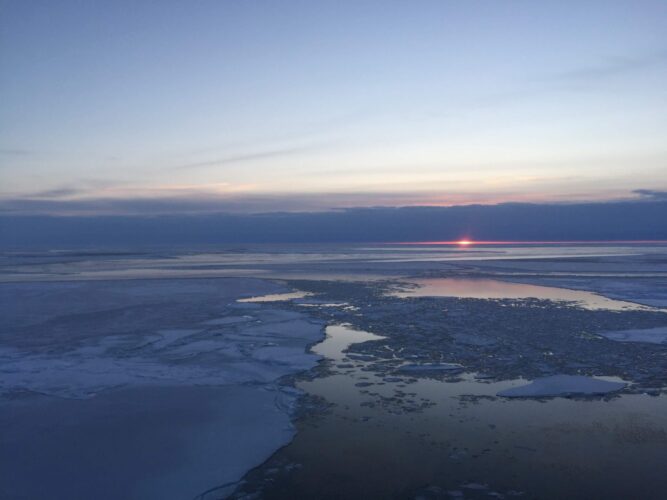
Today, significant amounts of carbon escape from the ocean to the atmosphere from the Southern Ocean, particularly in the Pacific-section of the Southern Ocean. This is because Pacific circulation is fairly sluggish, accumulating lots of carbon in its waters as a result. Most of this carbon travels all the way south to the Southern Ocean surrounding Antarctica, where it comes up at the surface and escapes, or outgases, into the atmosphere.
However, proxy data collected from the North Pacific in an earlier study indicate that the Pacific experienced a more vigorous circulation during the last ice age. In this new work, researchers used model simulations to show that such a vigorous circulation not only lowers the carbon content of these Pacific waters, shifting the carbon instead in deeper waters below, but that this effect is so profound that it reaches all the way to the Southern Ocean.
With lower-carbon waters feeding up into the surface, researchers found that the overall rate of outgassing in the Southern Ocean was reduced significantly, by 50% on average. By so significantly stemming this “leak” of carbon out of the ocean, the researchers propose this vigorous Pacific circulation could have played a key role in drawing down atmospheric CO2 levels, driving the Earth into an ice-age climate. This result was also significant as the effect on the Southern Ocean outgassing was triggered by dynamics happening in the far-flung North Pacific.
Dr Madison Shankle, from the School of Earth and Environmental Sciences at the University of St Andrews who co-authored the study, said: “This result and can help explain why atmospheric CO2 levels were so much lower during glacial periods. It’s also significant as the ice-age palaeoceanographic community has historically focused very much on the Southern Ocean, with less consideration given to other far-away regions that might influence it.”
Co-author, Dr James Rae, Reader in the School of Earth and Environmental Sciences, said: “The Southern Ocean is a really critical region for climate, as it can take up or give out CO2. The finding that it can take up or give out CO2 as a function of global circulation change means we need to keep a careful eye on how the Southern Ocean is changing today and into the future. “
Category University news