The peatland ‘nurseries’ of Peru give new insights for conservation
New research from the University of St Andrews has shown that an important group of peatlands in the western Amazonia region of Peru developed more recently than many other peatlands in the tropics.
Published in the journal Palaeogeography, Palaeoclimatology, Palaeoecology, the study analysed more than 150 new and previously published radiocarbon dates from peats from the Pastaza-Marañón Basin in northern Peru. This is the largest known peatland complex in Amazonia, covering an area about the size of Belgium.
The international team, led by members of the St Andrews Centre for Critical Sustainabilities and the school of Geography and Sustainable Development, showed that these peatlands, although thousands of years old, are younger than in many other tropical regions, such as the Congo Basin and South East Asia where peatlands can be tens of thousands of years old.
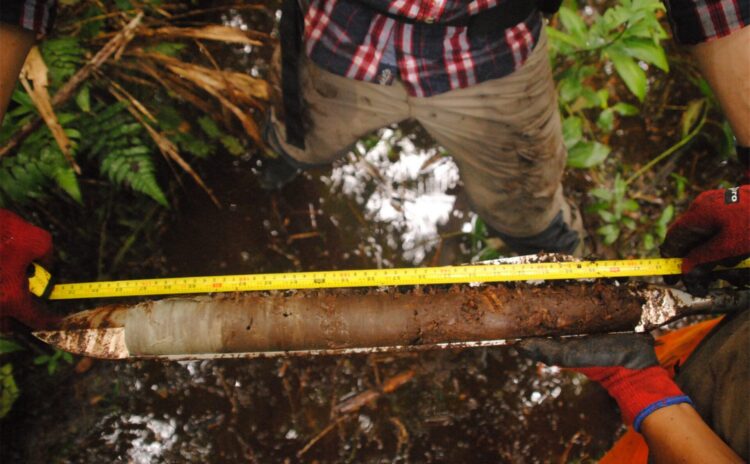
All of the peat samples in the newly enlarged dataset from the Pastaza-Marañón Basin are less than 9000 years old, and frequently less than 2500 years old. This makes the region one of the most dynamic peat-forming regions on the planet.
Peatlands lock up carbon from the atmosphere and store it over centuries to tens of millennia. Knowing the age of peatlands helps to understand their origin, their development over time, and their stability as carbon stores, all of which are critical to informing peatland conservation and management.
Researchers found that the age of individual peatlands varies depending on the stability of the landscape. Younger peatlands typically occur close to the river floodplains of the Amazon and its tributaries. These huge rivers frequently shift their channels, creating and destroying peatlands as they do so. Older peatlands are confined to areas well away from these active floodplains.
Researchers have also found evidence for pauses in past peat accumulation, suggesting that carbon storage in some, but not all peatlands has been vulnerable to past changes in the flows of water and/or to past climate change.

Lead author of the paper, Dr Ian Lawson from the University of St Andrews School of Geography and Sustainable development, said: “What’s really striking about these results is that they underline just how different peatlands are across the tropics. Work published last year by some of our team showed, for example, that some peatlands in the Congo Basin in central Africa are over 40,000 years old – four times as old as these peatlands in Peru.”
He added “What’s more, the Congo Basin peatlands we studied had all been badly affected by episodes of drought in the prehistoric past. On the whole, the Peruvian peatlands seem not to have been quite so vulnerable, though we’re still concerned about how future climate change will affect them.”
Co author Dr Adam Hastie from Charles University in Prague, said: “One lesson is that, although peatlands everywhere obey the same laws of physics and chemistry, the differences in geology and biology from region to region mean that we can’t use one-size-fits-all policies to manage them. Ecologically, they’re hugely variable, which is part of what makes them so interesting to study.”
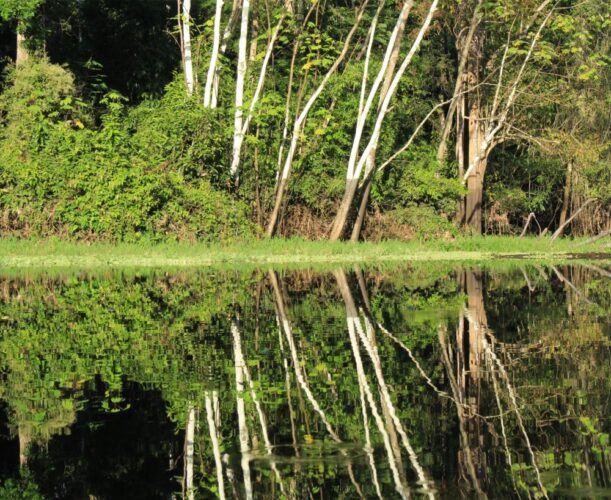
Previous research by the same group has shown that peatland ecosystems in the region are economically important sources of non-timber forest products such as palm fruits, which it may be possible to harvest sustainably without loss of the forest or drainage of the peatlands. However, the new analysis shows clearly that the peat itself accumulates far too slowly – at rates of a few millimetres per year at most – to be considered a renewable resource.
Co Author Dr Katy Roucoux from the School of Geography and Sustainable Development, said: “All too often in the past, in countries including Britain, peatlands have been badly damaged, sometimes by accident but more often drained on purpose. But the peat in Peru grows ten times more slowly than our fingernails do. It’s really important to understand that the carbon that the peatlands have gradually stored over thousands of years could be lost very quickly, exacerbating climate change, if we don’t look after them. And peatlands can’t be replaced any time soon.”
ENDS
Category ecology