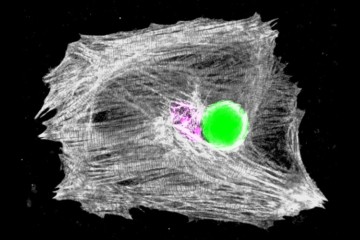
Feel the beat: implanted microlasers scan heart from inside
St Andrews researchers have developed lasers beating to the rhythm of a live heart to improve the understanding of heart failure.
St Andrews researchers have developed lasers beating to the rhythm of a live heart to improve the understanding of heart failure.
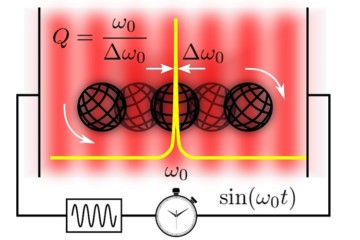
A mechanical ‘clock’ has been created by international researchers, led by St Andrews, which could test the fundamental physics of gravity.

New research helps answer one of the most asked questions in geoscience: when did Earth start to become habitable to complex life?

Scientists from St Andrews will study the carbon stored in Scotland’s coastal wetlands and their role in the fight against climate change.

One of the most promising theories for the evolution of human speech has finally received support from chimpanzee communication research.

The ability to recognise relatives can make life more dangerous for the female of the species, new research has shown.

A UK-wide research team has developed an innovative way to monitor the reaction of living bacteria to antibiotics using lasers and sound.

New international research reveals warming in temperate regions leads to species gains at sea, but not on land.

How birds build their first nest depends on the environment in which they grew up, according to new research from St Andrews.

The way bats communicate is to form part of a £1.5m seven-year study to shed light on the evolution of human language.