RSE welcomes five new Fellows from St Andrews
The prestigious accolade recognises the advancement of learning and useful knowledge, which is at the centre of public life, across the arts, business and technology and science sectors.
The prestigious accolade recognises the advancement of learning and useful knowledge, which is at the centre of public life, across the arts, business and technology and science sectors.
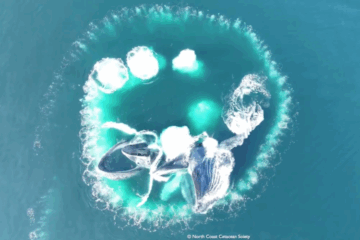
New research highlights shared knowledge in whales that strengthens the population's resilience and may provide conservation benefits.
Results indicate that there are seasonal patterns in bycatch rates for harbour porpoise, common dolphin and seals.
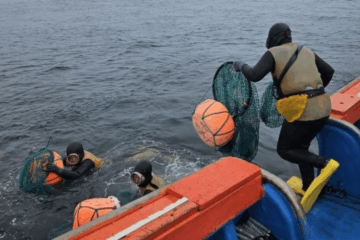
New research has found that the Haenyeo, a group of women who free dive for seafood without oxygen, spend more time under water than some diving mammals.
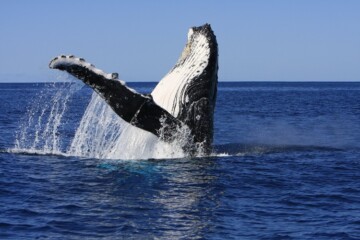
New research led by the School of Biology finds whale song has a human language-like structure

A new understanding of adaptive evolution is emerging, thanks to an international team of scientists, led by the School of Biology.

Pioneering scientists to explore the impact of British wind farms on the seabed amid plans to build up to 25,000 more offshore turbines.

Birds of a feather really do flock together, or build together as the case may be, incorporating their unique architectural style when building nests, according to new international research.
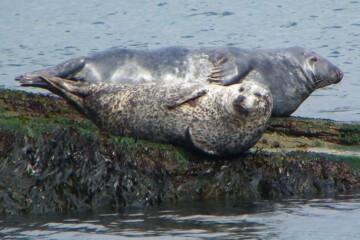
An international conservation initiative has identified new Important Marine Mammal Areas (IMMAs) in the Northeast Atlantic Ocean.
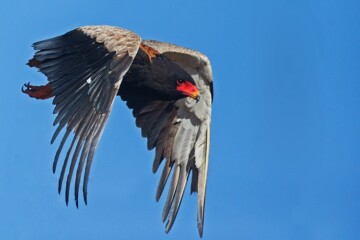
An international team of researchers has found that Africa’s birds of prey are facing an extinction crisis.