
Ever evolving evolution
A new understanding of adaptive evolution is emerging, thanks to an international team of scientists, led by the School of Biology.
A new understanding of adaptive evolution is emerging, thanks to an international team of scientists, led by the School of Biology.

Pioneering scientists to explore the impact of British wind farms on the seabed amid plans to build up to 25,000 more offshore turbines.

Birds of a feather really do flock together, or build together as the case may be, incorporating their unique architectural style when building nests, according to new international research.
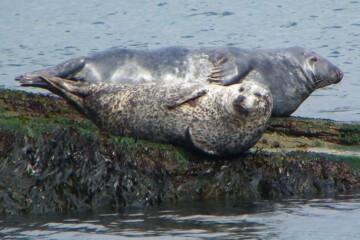
An international conservation initiative has identified new Important Marine Mammal Areas (IMMAs) in the Northeast Atlantic Ocean.
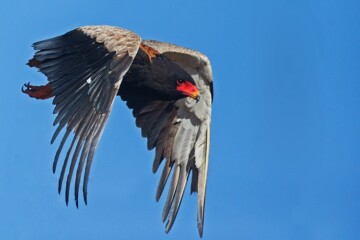
An international team of researchers has found that Africa’s birds of prey are facing an extinction crisis.
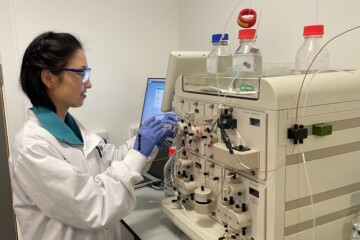
A PhD researcher studying microbes in the human gut has discovered a new molecule that acts as a ‘distress signal’ when viruses are detected.
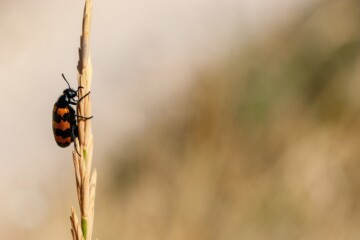
Animals who mate during a heatwave are less likely to reproduce successfully, according to new research led by the Universities of St Andrews and Aberdeen.
St Andrews is set to host the second international brain health summit, securing Scotland’s place as a hub for neurodegenerative disease research.
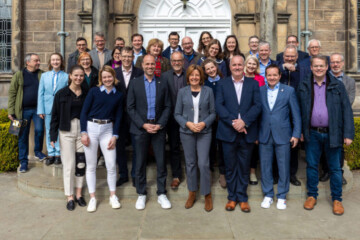
St Andrews played host to a delegation of politicians, academics, and media from Rhineland-Pfalz Palatinate in Germany this week.
Four St Andrews professors were elected to join the Royal Society of Edinburgh’s 2023 intake of Fellows this week (Wednesday 22 March).