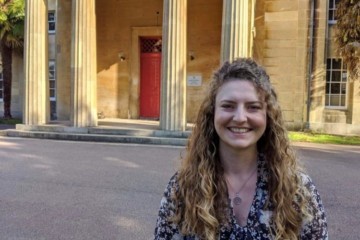
Reach for the stars
How black holes, galaxies and the universe were created are some of the questions inspiring young women to consider a career in STEM.
How black holes, galaxies and the universe were created are some of the questions inspiring young women to consider a career in STEM.
Computer simulations created by researchers at St Andrews could be used to create more effective treatments for tackling medical issues.
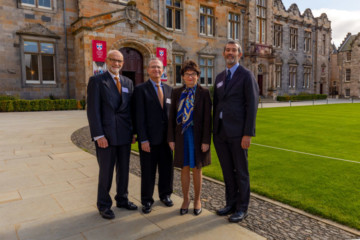
A new institute has been created to help improve earlier diagnosis of cancer, cardiovascular disease, mental health and infection.
Budding astronomers will be given the opportunity to view the night sky this Saturday when the Observatory opens its doors to the public.
St Andrews researchers have achieved a breakthrough in laser measurement which could revolutionise the future of fiber-optic communications.
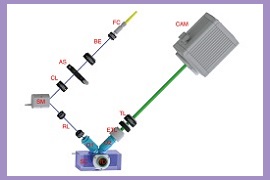
A marriage of sound and light could hold the key to diagnosis of the early stages of various diseases, including cancer.
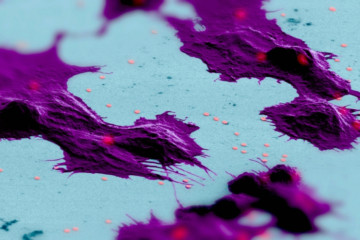
A team of researchers at the University has developed tiny lasers that could revolutionise our understanding of many diseases.
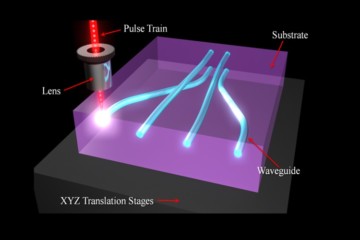
A €2.6m project, led by researchers at the University, is part of a €1 billion scheme to boost quantum technologies in Europe.
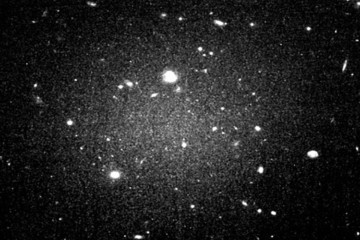
An international group of astronomers, including physicists at St Andrews, has revived a previously debunked theory of gravity.
Professor Kishan Dholakia (Physics and Astronomy) receives the SPIE Dennis Gabor Award 2018 for his use of diffractive optics.