Seal milk rivals human milk in complexity
New research from the University of St Andrews alongside fellow institutions has found that Atlantic grey seal milk rivals human breast milk in sugar complexity. The findings, published in Nature Communications, challenges previously held assumptions that human milk is uniquely complex amongst mammals.

Grey seals in the UK come ashore to breed in colonies where the health of young pups is challenged constantly by pathogens and injury. Mothers fast while ashore, feeding their pups intensively for about two and a half weeks before weaning, when a pup can have trebled its birth weight. The mother’s milk changes its composition during lactation and can be up to 60% fat (cow milk is 4%) and protein rich. While these components allow rapid growth and energy supply, the structures and functions of the sugar content of seal milk are only just beginning to be understood using powerful new analytical techniques.
Milk oligosaccharides (MOs), are a group of sugars that contribute to infant development and health in all mammals. These sugars have critical roles including protection from pathogens, cultivating the initial microbiome, and promoting intestinal tract development. Despite their importance, there are large gaps in our knowledge of milk sugar diversity in animals other than humans, in part because of the difficulties in obtaining adequate samples.
In the most complete study of milk changes in a wild mammal to date, researchers from the Sea Mammal Research Unit, University of St Andrews collected milk samples at 3–4-day intervals during the lactation periods of five wild Atlantic grey seals on the Isle of May, Firth of Forth.
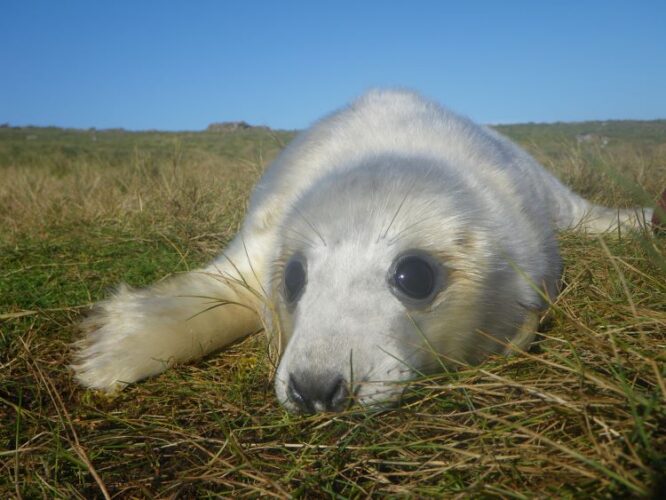
Using the latest powerful analytical techniques, researchers from the University of Gothenburg discovered 332 different sugar molecules (compared to approximately 250 found in human milk) and structurally characterised 240. Of these 240, approximately two-thirds (166) had not been previously documented.
Some of these molecules reached a size of 28 sugar units, up to 10 units more than the largest known human milk sugars. The authors reveal that the sugar composition of seal milk undergoes coordinated changes throughout the lactation period to fit the changing needs of the infant, similar to changes seen in human milk.
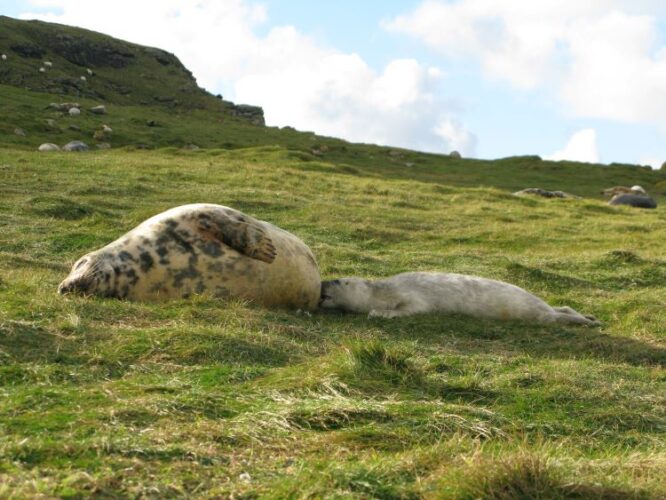
Several of these newly discovered sugars possess antimicrobial and immunomodulatory properties, with potential applications in the biomedical sciences. This offers potentially promising avenues for discovering bioactive compounds with potential applications in infant nutrition, infection control, and immune system support.
Dr Patrick Pomeroy, of the Sea Mammal Research Unit at the University of St Andrews who led the seal work in the study, said: “Of the factors that contribute to seal breeding success, early pup survival is critical. These previously unknown components of milk and the way they change during lactation, open up exciting new questions for understanding how pups might fight infection. This work represents a dramatic improvement in understanding the evolution and function of mammalian milk sugars and how they fit a species’ biology.”
Category University news