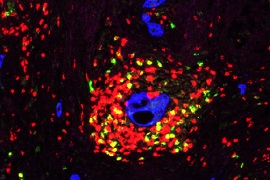
New test for colorectal cancer
A new prognostic method, which would allow colorectal cancer patients to be identified more accurately, has been created at St Andrews.
A new prognostic method, which would allow colorectal cancer patients to be identified more accurately, has been created at St Andrews.
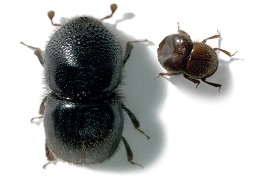
Researchers from Edinburgh, St Andrews and LSHTM have solved the puzzle of why fatherless insect babies are born male.

St Andrews researchers have achieved a breakthrough in laser measurement which could revolutionise the future of fiber-optic communications.

International researchers argue that animals’ cultural knowledge should be considered when planning international conservation efforts.
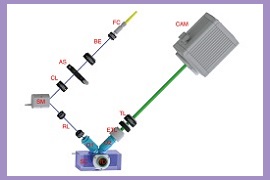
A marriage of sound and light could hold the key to diagnosis of the early stages of various diseases, including cancer.
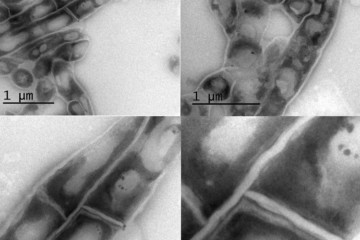
New medical advances could revolutionise the ability to treat undetected tuberculosis (TB).

Mapping baboon genomes could help unravel the evolutionary history of modern humans, new research has found.

A new report on the 2011 London Riots challenges the explanations of the riots given at the time.

Seal behaviour in the Antarctic will be studied by academics from St Andrews to find out how fast a massive glacier is melting.
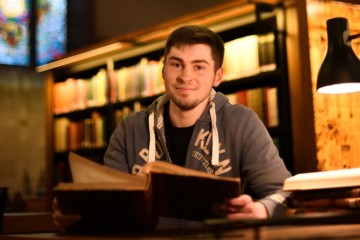
Coded religious documents, which left generations of academics baffled for centuries, have been cracked by a St Andrews student.